A solver plays every chapter before anyone else does
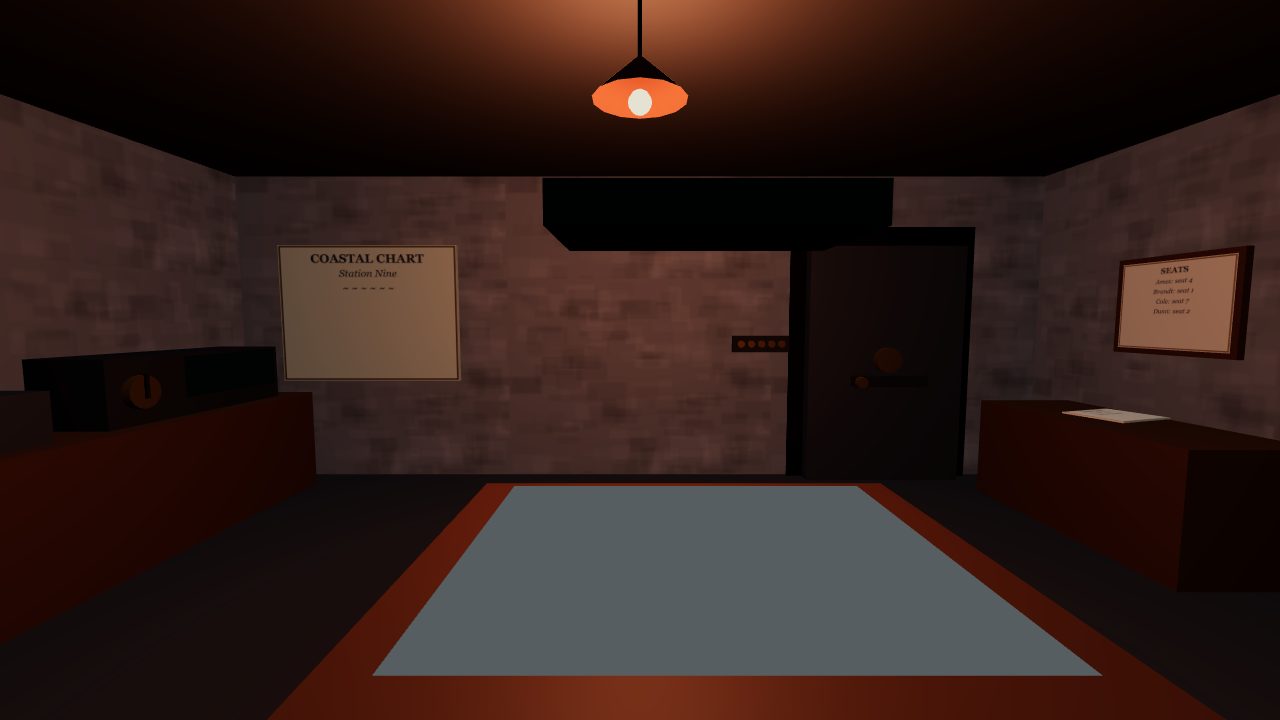
The worst thing an escape game can do is let you get stuck for good: use up the one item you needed, open things in an order the designer did not expect, and leave yourself with no way out. You would never know. You would just keep looking.
Way Out has a way to rule that out before anybody plays: a solver that plays every chapter first.
Rules as data
Each chapter is written as data rather than code. Every object has a list of rules: when you do this, and these things are true, then these things happen. The drawer opens, the key is given, the journal records a clue, the puzzle is marked solved. The game you play reads those rules, and so does the solver.
The solver starts from the beginning of a chapter and tries every move the rules allow, then every move after each of those, and so on, keeping track of every different situation it reaches. Because it searches outward one step at a time, the first time it reaches the end it has found the shortest way through. For the Observatory that is 49 moves; for the Night Mail, 52.
What it proves
- The chapter can be finished. If the solver never reaches the end, something is wrong.
- You can never get stuck. From every situation the solver reaches, it checks that the end can still be reached. If it finds a situation with no way out, that is a softlock, and the chapter fails. The solver caught a real one while I was building the Prologue, before anyone had played it.
- Nothing is orphaned. Every puzzle can be reached, and every puzzle has hints.
- Your pockets never overflow. The solver reports the most items you will ever carry at once, and fails a chapter that needs more than ten. In the Lighthouse that is why the crowbar bends and is left behind once it has opened the crate.
A puzzle the solver beat
The most useful thing the solver ever did was beat one of my puzzles in a way I did not intend.
In an early version of the Night Mail, the signal box's levers could be pulled by hand, and pulling them in the wrong order jammed the frame. The solver found that trial and error was faster than reading the rules: the rules under the frost on the window, chalked in the goods shed and in the stationmaster's book were never needed, because a wrong pull told you straight away that you were wrong.
A person would do the same thing, sooner or later. So the order is now set on a plate of dials, and the solver only gets to try it once every rule has been read. The lesson went into the design notes for every chapter since: a puzzle that gives feedback on every wrong try can be brute-forced, so when the clues matter, the answer should be entered all at once.
The Conservatory taught a smaller lesson. An early version had a fern you could water and a plate behind it that nothing needed. The solver did not mind, but a player who did all that work for nothing would. An optional chain is a dead end, so the watering can now has a real job: waking the orchids.
Keeping it fast
The search grows quickly. Fifteen separate boards and notices in the Night Mail, each of which could be read in any order, pushed it past three hundred thousand situations. The answer was to let the solver take anything that only reads a clue, or only picks something up, the moment it can, instead of trying every order of them. Reading a notice never makes anything worse, so nothing is lost. After that change the Lighthouse needed about 1,500 situations instead of 48,000. Station Nine, a single room full of switches that can be on or off, still explores about 84,000.
What it cannot tell me
The solver can prove a chapter is finishable and fair to the rules. It cannot tell me whether you will notice the writing under the frost, whether a clue uses two different words for the same thing, or whether a puzzle is any fun. Every one of those has come from watching real people play, and those stories are in the other posts here.
Discussion
No replies yet. Start the discussion: what did you make of it?