52 minutes on the Night Mail
The Night Mail is the longest chapter in Way Out: seven rooms of a snowbound junction, ten items, and two big logic puzzles. Its first player finished it on a desktop in 52 and a half minutes, against a target of 38. The countdown ran out at 39 minutes and they kept playing in overtime, asked for four hints along the way, and got the train moving.
Fifty-two minutes sounds like a chapter that is too long. The log said something more useful: about 29 of those minutes were two stalls, both in the signal box. Everywhere else the chapter flowed, with a puzzle solved every thirty seconds to a minute in the early rooms.
Stall one: nine minutes poking at levers
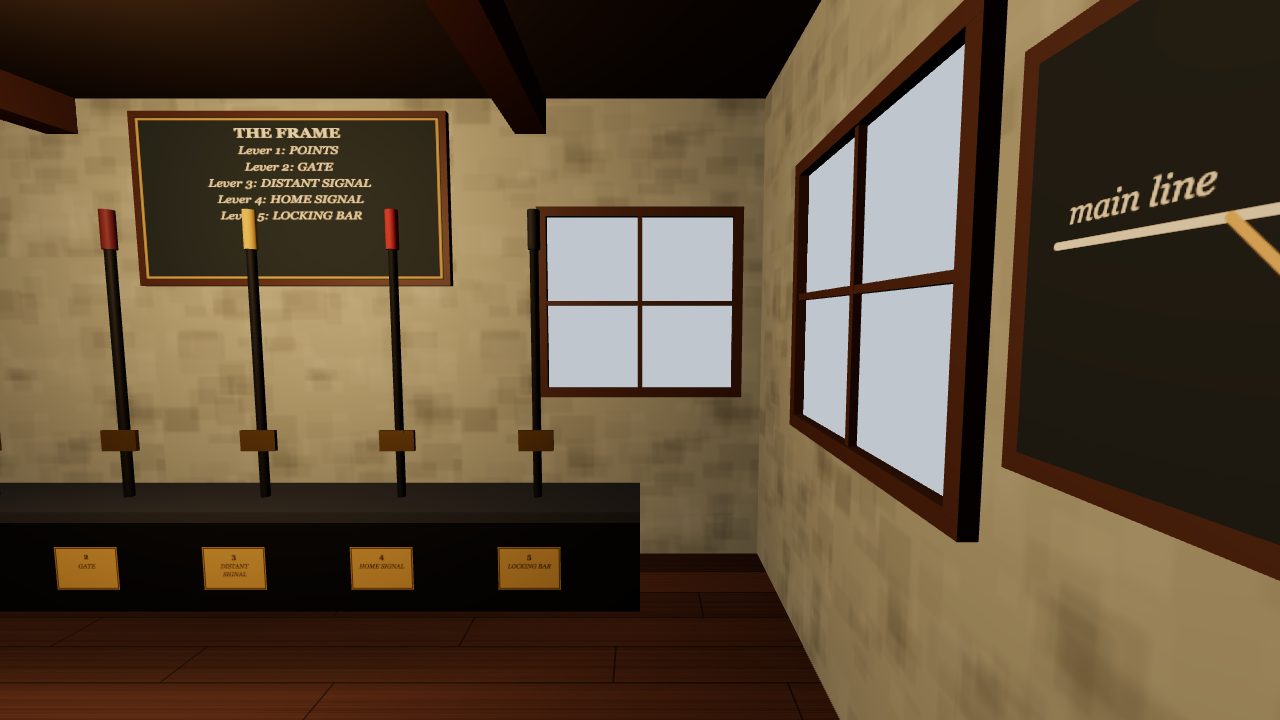
The signal box has a frame of five levers, and the order they are pulled in is the chapter's final puzzle. To work it out you need to know which lever is which: the points, the gate, the distant signal, the home signal and the locking bar.
That information was on a board of painted plates over the frame. The board hung high on the wall, and the levers themselves only said "Lever 1" to "Lever 5", with nothing to suggest a board existed. The player spent about nine minutes trying the levers and used three hints before reading the plates.
Now trying any lever shows its own plate ("Lever 4 is the HOME SIGNAL", say) and writes the whole list into the journal. Each lever has its name on a plate on the frame itself, and the hints point at the levers rather than at a board you might not have seen.
Stall two: twenty minutes on "one straight after the other"
The order of the levers is set by seven rules written in four places: under the frost on the waiting-room window, in chalk in the goods shed, in the stationmaster's book of rules and on a notice in the signal box. Exactly one order obeys all seven.
The player tried three wrong orders, quit, came back and solved it. Their three wrong answers had one thing in common: each put the points and the distant signal next to each other, which one of the chalk rules forbids. The rule said they were never pulled "one straight after the other", and it had been read as one direction only: not the points straight after the distant signal, but the other way round was fine.
That was my wording, not their mistake. The two rules about neighbours now say "back to back, in either order". The journal also gathers all of the frame rules into one group, because the log showed the player opening the journal about 35 times, most of it hunting for rules scattered between other clues.
Twenty tries in twenty-five seconds
One small thing: the player tried to put a bundle of mail back into the ticket office's parcel pigeonholes twenty times in a row. That was where it had come from, so it was a reasonable thing to try. It now gets a short reply saying the bundle is mail and is going somewhere.
What worked
Both decoys did exactly their job. The wall calendar in the ticket office has a date circled in red, and it was typed into the cash drawer before the player worked out that the drawer wanted the date of the latest notice. The old notice's platform number was typed into the telegraph before the newer notice won. Each cost one wrong try and taught the right lesson.
The tally marks, the porters' rota and the coat-hook numbers cost one wrong code between them. The mail sorting, where the bundles go in the reverse of the timetable's order because the Night Mail runs the other way, was partly solved by trial and error in under two minutes. That is a known soft spot: wrong bundles are handed back, so it can be brute-forced, but it is cheap rather than harmful.
Reading the pace
Without the two stalls this player's time would have been roughly 25 to 30 minutes. That is under the 38-minute target, but one player is not a measurement, so the target stays where it is until more people have played it. The stalls are fixed, and the next player will tell me whether 38 minutes is right.
Play it yourself: The Night Mail, with its walkthrough, or open the game.
Discussion
No replies yet. Start the discussion: what did you make of it?