The Conservatory on a phone
Way Out plays on phones as well as computers: a thumb stick walks, dragging the picture looks around, a tap interacts and a press and hold inspects. Building that is one thing. Finding out what it is like to play a whole chapter that way is another, and the Conservatory's first playtest was the first chapter played start to finish on a phone.
The player finished in 18.7 minutes, under the 25 minutes I had planned for, without a hint. Asked whether they would keep playing, they said "maybe". Their favourite part was working out the word for the gate. And under "what felt unfair", they wrote this:
"The crank was not working when I had it selected and tapped on mirrors. Also it said to use / to move it but I'm on mobile."
Both were real problems, and both were invisible on a computer.
The crank that did not work
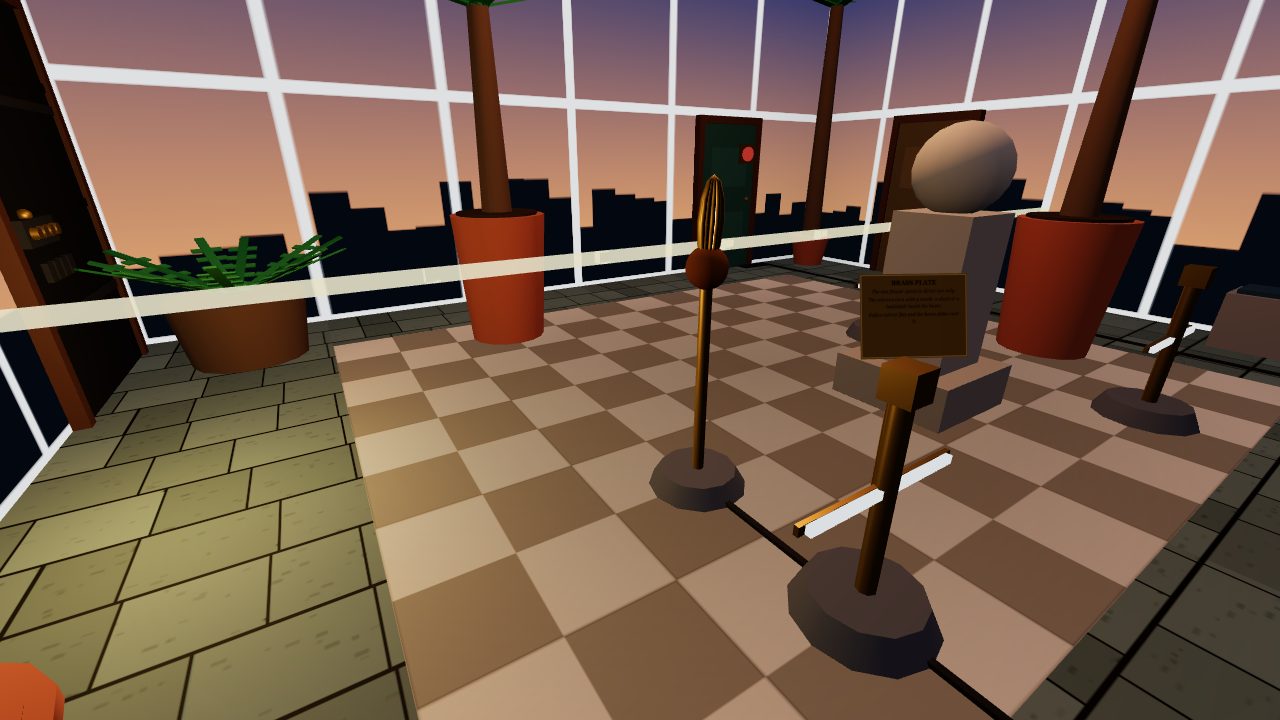
The palm house has three mirror stands that you turn with a crank to steer a beam of sunlight. On a computer you pick up the crank and click a mirror, and it turns. The player held the crank and tapped the mirrors ten times, and nothing happened. A plain tap with nothing held worked.
The reason was in how the game hears a tap. On a phone, holding an item and tapping something always means "use this item on that". The mirrors only had a rule for "interact, while carrying the crank". So the tap arrived as a "use", found no rule for it, and did nothing.
The fix went into the engine rather than into the mirrors: when you use an item on something, and that thing has an interact rule that asks you to be carrying that item, the game now runs the interact rule. That one change fixed the mirrors, the brass tiles on the gate, which had failed three taps the same way, and the ticket on the cinema seat in the Starlight, a chapter that had not even been playtested yet.
The slash that looked like a key
The mirror's text described its settings as a "slash (/)" and a "backslash (\)". On a phone with no keyboard, the player read the symbols as an instruction to press a key that did not exist. Now the text uses words only, a mirror "leans like a slash", and says to hold the crank and tap the stand.
Thirteen minutes with a full watering can
The watering can is filled at a tap in the palm house and wakes the orchids in a room behind the sunbeam puzzle. The player filled it three and a half minutes in, then tried it on the fern, the cactus, a plaque, the pots, the gate and a door. For thirteen minutes it had no visible use, because the room that needed it was still locked.
Now you can see the orchids through the glass of the locked door, drooping and plainly in need of a drink. The tap says that something in the glasshouse is thirsty. And the fern and the cactus refuse the can in words, so a wrong guess still tells you something.
A light switch flipped too fast
In the potting shed, switching the lamp off makes three pots glow with numbers. The player switched it off and straight back on twice without looking at the pots, and only read the glow twelve minutes in, after three blind guesses at the toolbox. The switch's message had been a long reading box that was closed at once. Now switching the light off shows the numbers itself and writes them in the journal, and each pot's letter glows above its number.
What worked, and the target
The cipher cost one wrong try, the orchids were solved on the first attempt, and the gate's word took just over a minute once all four tiles were in hand. Even with the stalls the chapter took under 19 minutes, so its target is now 20 minutes: the Conservatory is the short one, and it should say so.
The biggest lesson was not about this chapter. A phone is not a small computer. The game's automated checks now include a phone: a script drives the real game with touch events, the stick, drags, taps, press-and-hold and the item bar, so a tap that does nothing is caught before anyone plays.
Play it yourself: The Conservatory, with its walkthrough, or open the game.
Discussion
No replies yet. Start the discussion: what did you make of it?