The Observatory, played twice
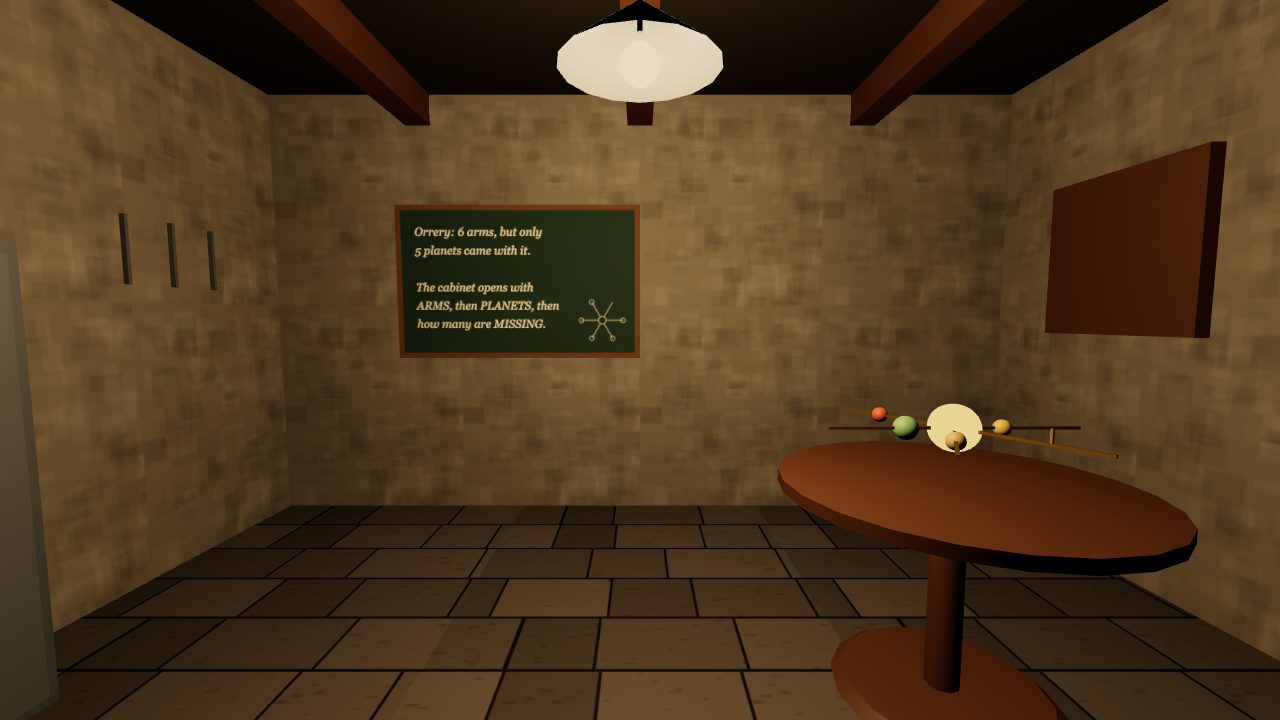
Every chapter of Way Out keeps a log while you play: what you clicked, what you read, which codes you tried and when. At the end of a chapter the game offers to let you download it. For a playtest that log is everything, because people rarely remember where their minutes went, and the log always does.
The Observatory was the first full chapter, and it has now been played cold twice. The two runs could hardly have been more different.
The first run: 33 minutes, two hints, and "yes"
The first player finished in 33 minutes against a target of about 30, asked for two hints, and said yes when the game asked whether they would play another chapter. Their favourite moment was the tool cabinet in the workshop, which they solved in 39 seconds. Their note at the end was short and fair: they had to go back to the clock room to discover that the stairs to the dome had opened, because nothing told them, and the very beginning was a little too dark.
The log told a longer story. In order of the time it cost:
- Sixteen minutes on the workshop padlock. The clue for it was written only in the padlock's own description, which you see by right-clicking. They never right-clicked it. Now every lock panel shows the words written on the lock, and labels any dial that has a meaning.
- Six minutes finding the dome. Setting the clock opened the dome, but nothing in the world showed it. Now the clock's message mentions cold light spilling down the stair, walking into the tower faces you toward the stairs, and the first hint for the dome says to look above the clock tower.
- Five minutes on the eyepiece. Using a lens on the eyepiece is the obvious thing to do, and it did nothing: only clicking the eyepiece opened it. Now using any lens on it works.
- The front gate, backwards. The gate's numbers come from patches of paving read in order, and "left to right" depends on which side you stand. Now each patch has a number carved beside it.
- About ten blind guesses at the star books, long before anything had told them the right order. Now the shelf says the books are in the wrong order and that something in the house must point at the constellations.
One thing the log made very clear: the arithmetic was never the problem. Once a clue was found, the lock it belonged to fell in under a minute, every time. The difficulty in this game is finding the clue and knowing which lock it is for. The sums can stay small.
The second run: 24 minutes, no hints, and "no"
The second player was a friend, on a build with all of those fixes in. They finished in 23.6 minutes without a single hint, which looks like a success, until you read their answers: no, they would not keep playing, and what felt unfair was that it was hard to tell what order to go in.
The log agreed with them.
- The quarters door sat unsolved for almost thirteen minutes. They had picked up Crane's letter a few minutes in and tried the door four times, and every time it said only "Go away! I don't know you!" Nothing hinted at what would get them in. Now the voice behind the door says it will not open unless you carry word from the Master himself.
- The workshop padlock took almost nine minutes after the ledger was read. The padlock's plate asked for the year the light first came; the ledger talked about the comet. Two clues for one lock, using two different words for the same thing. Both now say the great comet.
- The star books were tried about fifteen times before the orrery had made them meaningful. They kept re-reading the shelf's "wrong order" message instead of leaving it, because nothing showed them that the shelf was waiting for something else.
My own note on that build was about the lenses. They were told apart only by a number engraved on each, typed into a lock, so their colours meant nothing at all. Now the eyepiece has three sockets with a picture engraved above each, and the lenses go in by colour.
The fix that mattered most
The biggest change was not to any one puzzle. It was the journal's Open leads list. Every locked or waiting thing in a chapter now has one line describing what is waiting, never how to solve it. Once you have been to its room, the journal lists it until it is done, marked either "You can try this now" or "Come back to this once you have found something else".
It answers the question the second player could not: which of the locks I can see is ready? Every chapter since has been built with a lead for every lock.
The lesson I took from these two runs, and have tried to apply to every chapter since: a locked thing that does not say what it wants is not a puzzle, it is a stall. Tell people what is waiting. Use the same word for the same thing everywhere. And keep the sums simple, because the finding is hard enough.
Play it yourself: The Observatory, with its walkthrough, or open the game.
Discussion
No replies yet. Start the discussion: what did you make of it?